


20 Nov Marine Hospitality Training: What You Need to Know
What Is Marine Hospitality Training?
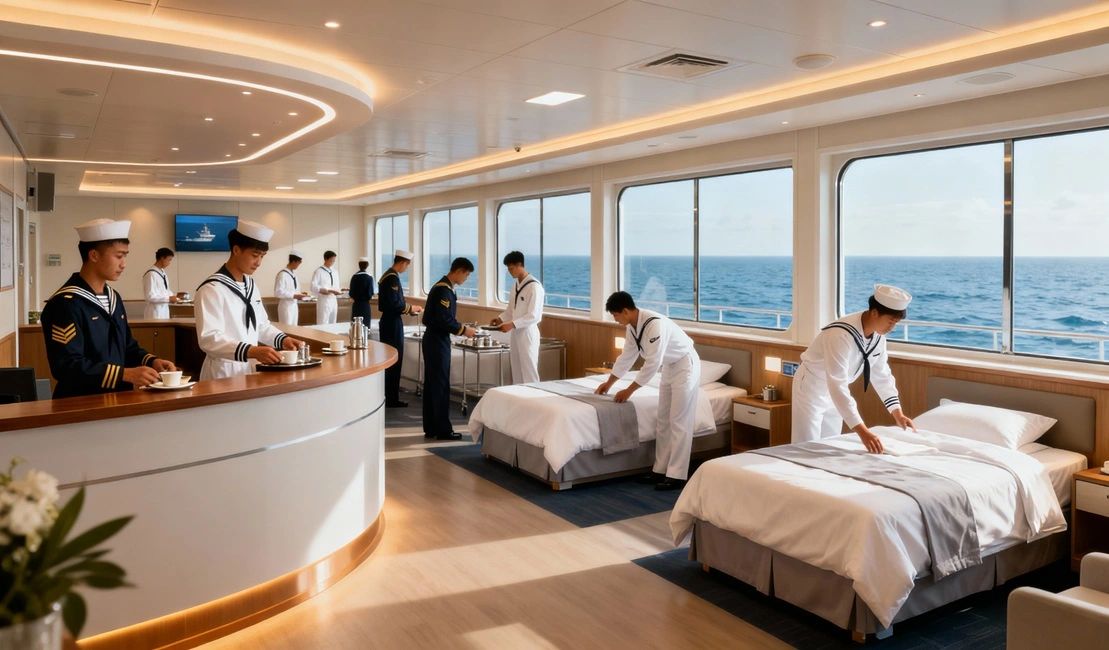
Training for a career in marine hospitality is concerned with providing theoretical and practical skills to the trainees who want to work in different departments within a cruise ship, like food and beverage service, housekeeping, guest relations and culinary operations.
These programs are designed to simulate real-life situations onboard so that the trainees can gain real-life experience of handling guests and operations under dynamic marine conditions.
Importance of Hospitality Skills in Cruise & Marine Industry
The cruise industry focuses on delivering memorable guest experiences, from fine dining and comfortable lodging to impeccable customer service. The cruise hospitality training ensures professionals are trained to handle a variety of guests, maintain high standards of hygiene and safety, and provide outstanding service across all touchpoints.
Strong communication, interpersonal and management skills, and developed training in marine hospitality guarantee that you can shine in such an environment and add to a smooth onboard experience.
Key Modules Covered in Marine Hospitality Training
At our academy, a wide variety of modules are taught in cruise ship hospitality programs to ensure all-around skill development.
The core modules are:
- Front Office and Guest Relations: Handling the check-ins, guest queries and onboard reservations.
- Housekeeping Management: Maintaining cleanliness and hygiene in cabins and other public places.
- Culinary Arts and Galley Management: International food and kitchen safety training.
- Safety and Emergency Procedures:. Understanding the maritime safety procedures and first aid.
- Cross-Cultural Communication: Learning to interact with passengers and colleagues around the world.
Essential Skills You Will Learn
Our well-structured cruise ship hospitality program helps you develop technical, interpersonal and leadership skills, including:
- Professional grooming and etiquette.
- Effective communication and problem-solving.
- Crisis and crowd management.
- Team coordination and management.
- HACCP and food hygiene standards.
- Customer service excellence and complaint resolution.
Eligibility & Requirements
To enrol in these courses, the applicants are typically required to have completed their 10+2 or an equivalent qualification from a recognised board. Those with a background in hospitality, hotel management, or tourism are often preferred.
Besides academic qualifications, the applicants should also meet some physical and medical fitness requirements set by the maritime authorities.
Course Duration & Certification
The duration of marine hospitality courses is usually 6 months to 1 year, depending on the degree and curriculum. Our programs consist of both classroom training and onboard internships for real-world exposure.
At the end of the training, trainees are awarded industry-based qualifications that are essential for working in any international cruise line and marine organisation.
Career Opportunities After Training
Many cruise ship jobs are available for graduates, including in services like:
- Food and beverage services
- Housekeeping and accommodation.
- Front office and guest services
- Galley operations
- Event and entertainment management.
Top Roles in Marine Hospitality
Cruise ship hospitality program graduates can pursue multiple sought-after roles, such as:
- Cabin attendant / Cruise steward.
- Food and beverage associates
- Bartender / Barista
- Guest relations executive
- Sous chef / Cook assistant
- Housekeeping supervisor
- Front office coordinator
Benefits of Marine Hospitality Training
There are several advantages of pursuing a career in marine hospitality:
- Opportunity to travel around the world while working.
- Competitive remuneration and benefits.
- Exposure to international standards and cultures.
- Profession and career security in a booming global industry.
- Networking with professionals from diverse backgrounds.
How to Choose the Right Training Institute
When choosing a training institute, make sure that it is associated with recognised maritime authorities and has strong industry linkages. Look for institutes offering placement assistance and practical training modules along with certification.
Reviews, alumni testimonials, and affiliation with reputed cruise liners can also help you in making an informed decision.
Conclusion:
The cruise industry offers fascinating and exciting career options with a good mix of adventure, global exposure, and the chance to develop as a professional, and our marine hospitality courses help you start your international career. The world becomes your workspace with the right guidance and determination, one voyage at a time.
Recent Posts
- Cruise Ship Jobs Courses in India: Step-by-Step Guide from Training to Job
- Cruise Ship Training and Placement Guide for Indian Students
- How to Choose the Best USPH STCW Training in India
- Job in Cruise Ship: Complete Guide for Beginners in 2026
- Top Skills Required for a Successful Cruise Career in 2026
The marine and cruise industry offers one of the most thrilling and gratifying employment prospects in the hospitality industry worldwide. However, before starting on this dynamic career, one has to go through marine hospitality training to obtain the necessary skills and industry-specific knowledge to succeed in cruise and marine setups. In this blog, we discuss the significance, course modules and the career opportunities available after completing cruise hospitality courses.
No Comments